

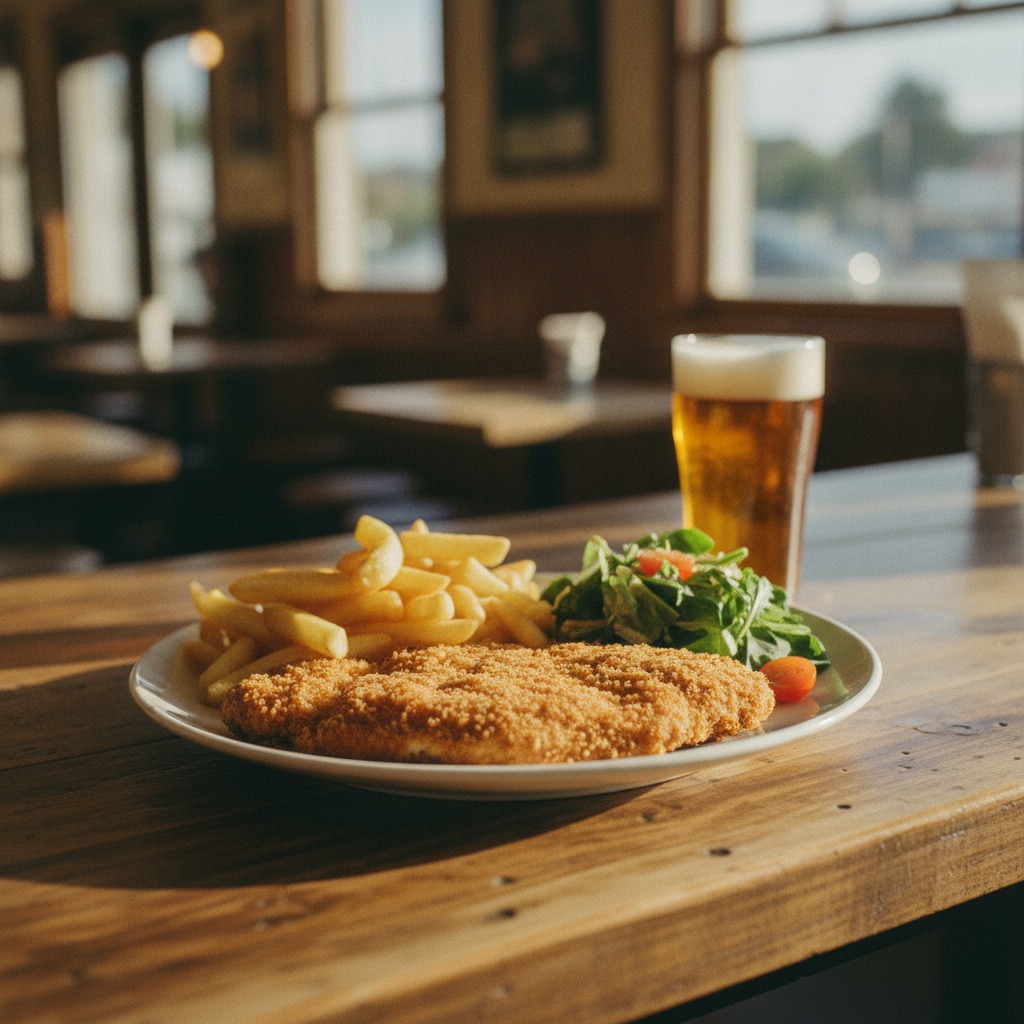
The verdict up front: the schnitty is the better test of a pub, and the parma is the better dinner at a pub that has already passed the test. Everything below is the evidence.
For the uninitiated: a schnitty is a crumbed, fried cutlet, chicken in its dominant modern form, served with chips and salad. A parma is that same schnitzel with tomato sugo, ham and melted cheese laid over the top. One is a foundation; the other is a renovation. The argument over which is supreme has run at pub counters across Australia for generations, usually unburdened by criteria. We are here to fix that with four judged rounds and a ruling you can quote at the counter.
Round one: crunch integrity
The whole point of crumbing and frying a piece of chicken is the crunch. A naked schnitty defends that crunch to the last bite: crumb, heat, salt, done. Nothing arrives on the plate with a plan to soften it.
The parma, by definition, pours hot sugo over its own best feature. A great kitchen manages the moisture and keeps the base crisp beneath the toppings; an average one serves you a crumbed sponge. That is not a flaw in the parma so much as a difficulty rating: it is the harder dish to execute, and it punishes shortcuts. Round one to the schnitty, on principle.
Round two: ambition
Judged as a complete construction, the parma is simply doing more: sauce acidity against fried richness, ham salting the middle ground, cheese holding the roof on. It is a dish with layers in every sense, and when it lands, it is the superior plate of food and the schnitty knows it.
The schnitty’s counter-argument is honesty. There is nowhere to hide thin chicken or stale crumb under a schnitty, which is precisely why regulars order it first at an unfamiliar pub. But honesty is a virtue, not a flavour. Round two to the parma.
Round three: plate geometry
Here the schnitty stages its comeback. Chips under a schnitty stay dry and structural. Chips under a parma sit in the splash zone of the sugo, and a chip that has absorbed sauce it never asked for is a casualty, not a garnish.
Serious venues answer this with the chips-on-the-side or the parma-beside-not-atop arrangement, and you can read a kitchen’s whole philosophy in that choice. Round three to the schnitty, with an asterisk for any pub that plates the chips out of harm’s way.
Round four: the culture war
No dish that is merely food could start the naming argument the parma sustains. Victorians say parma. Much of Queensland insists on parmi. The long-form parmigiana appears on menus that iron their tablecloths. The dispute has outlived governments, survived a thousand pub trivia nights, and picking a side instantly reveals where you grew up. Families have gone quiet over it at Sunday lunch.
The schnitty, meanwhile, is called the schnitty from Perth to Palmerston North, a rare piece of trans-continental consensus. Cultural gravity: parma. Diplomatic elegance: schnitty. Round four is a draw, which both camps will find insulting.
The ruling
Two rounds, two rounds and a draw, so context decides. At a pub you do not know, order the schnitty; it is the instrument that measures the kitchen. At a pub you trust, order the parma; you have already established they can handle the responsibility. And if the specials board offers either at a price that seems too kind, that is the pub subsidising your research, so cooperate.
You will find both anchoring counter menus everywhere, from big suburban locals like Bankstown’s Red Lantern Hotel, where schnitzels share the pub-classics board with burgers and steaks, to dining rooms that will only say parmigiana. The dish adapts to its room. That is half the reason it has survived.
Run your own inquiry
The only respectable way to disagree with this ruling is fieldwork. Line up candidate pubs on our food and drink listings, plan the rest of the day around the verdict with things to do nearby, and report your findings to the counter staff, who have heard it all before and will still take your order with a straight face.