
Darwin is a city that engineered its own swimming holes, and that detail should organise your whole weekend. The harbour is home to crocodiles and worse, so the locals built a patrolled wave lagoon downtown and a filtered saltwater lake at East Point, and the correct two-day plan simply alternates culture in the mornings with safe water in the afternoons.
That is the entire strategy, and it has the advantage of being the one locals use. Day one belongs to the Waterfront and the city; day two belongs to the green edges. Move early, swim after lunch, be near a cold drink by sunset. Time it for the dry season if you can; the whole city is built around those months.
Day one: the city and its man-made beach
Morning: art and bush food on Smith Street
Start at Aboriginal Bush Traders in the Charles Darwin Centre at 19 The Mall, where an Aboriginal art gallery and retail store share the space with the Wild Food Café and its menu built on local Australian produce. It is the rare souvenir stop that doubles as breakfast, the produce is authentically local, and the art on the walls is the real thing, sold with its provenance intact.
Then head for the Museum and Art Gallery of the Northern Territory. Entry is free, the Cyclone Tracy exhibition explains more about this city than any guidebook, and Sweetheart, the famous crocodile, is on permanent display as a reminder of why the afternoon swim happens in a lagoon. The Saltwater cafe looks straight out to sea when you need a pause, the Store covers books and souvenirs, and a program of talks and workshops runs year-round if your visit lines up with one. Temporary exhibitions rotate through often enough that even repeat visitors find something new.
Afternoon: the Wave Lagoon
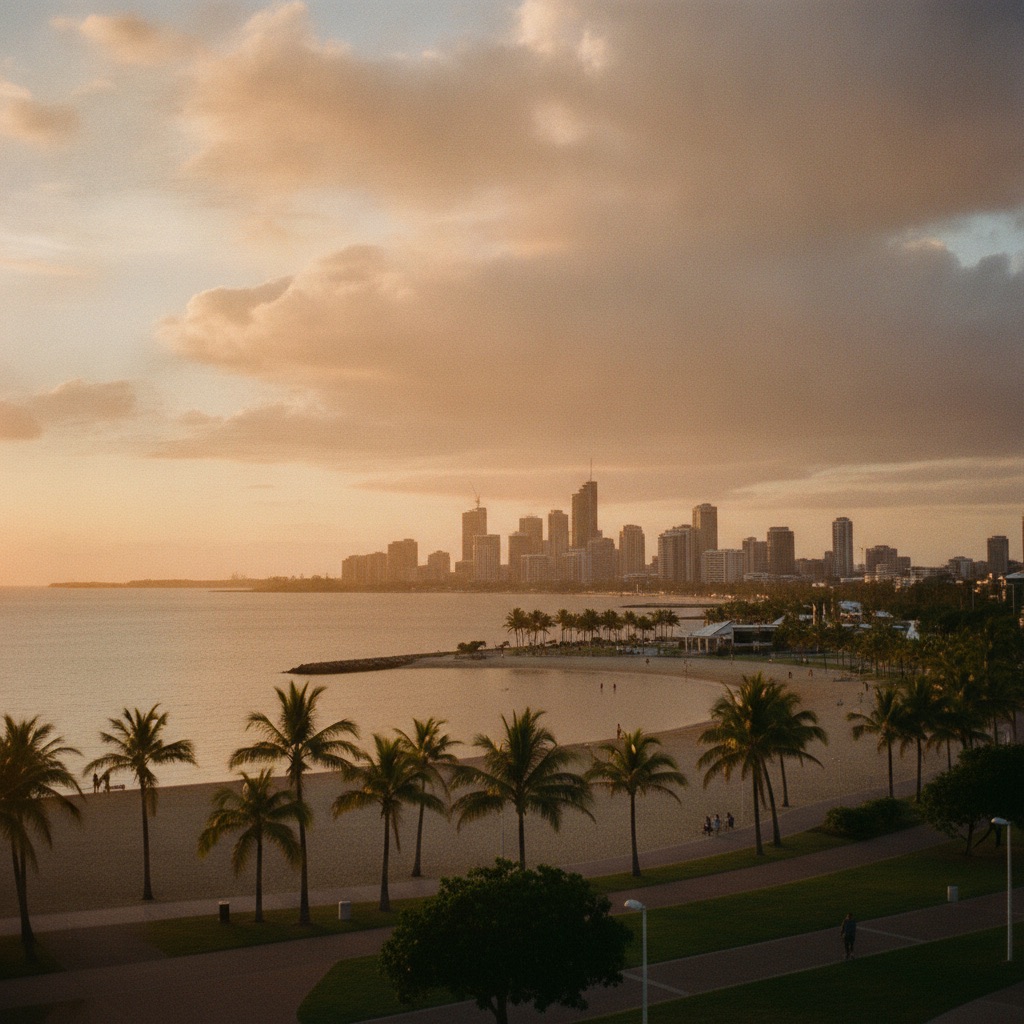
The Darwin Waterfront precinct is the city’s tropical living room: lawns, a man-made beach, a saltwater recreation lagoon, and a ring of restaurants and cafes running from casual to occasion-grade. It sits within walking distance of Smith Street Mall, stays open from early morning until late, and runs a year-round program of festivals, live music and food events, so check what is on before you commit your evening elsewhere. Adjacent Stokes Hill Wharf handles the fish-and-chips end of the spectrum, along with fishing off the boards.
Its centrepiece, the Wave Lagoon, is fully patrolled, two metres at its deepest, and sends waves rolling through every 20 minutes for the tube-riders and boogie-boarders. Between sets you retreat to a banana lounge or a shady patch of lawn. There are worse civic achievements than scheduled surf. And if your day two lands on a Sunday, Aqua Zumba runs in the lagoon from 9am, beloved by tourists and locals in equal, damp measure.
Sunset: dinner on the harbour
Walk around to Stokes Hill Wharf for the evening’s main event. Cape Adieu Harbour Cruises departs from Dock 3 and pairs the famous Darwin sunset with a menu of homemade dips, Gulf banana prawns, Coffin Bay oysters, local fish of the day and its signature Spanish mackerel. Watching the sky perform over Darwin Harbour, a natural harbour larger than Sydney’s and dotted with wrecks from the war and Cyclone Tracy, is the city’s best free show, upgraded here with dinner attached. The keen can come back in daylight for barramundi fishing or a scuba trip around the wrecks; the harbour rewards both.
Day two: the green edges
Morning: monsoon gardens, then war bunkers
The George Brown Botanic Gardens have been growing since 1886 and sit only three kilometres from the centre, with free entry and dry-season hours from 7.30am. The collection concentrates on coastal monsoon species from northern Australia and South East Asia, arranged through a rainforest gully, waterfalls, lily ponds and a plant display house. Guided tours run on weekday mornings through the dry season, so weekenders self-guide, which the layout makes easy. Go early; the shade is the point.
From there, Charles Darwin National Park swaps botany for history. WWII-era concrete bunkers still stand among the peppermint forest, one of them converted into a visitor centre full of wartime memorabilia, and the Larrakia people’s middens record a far older story. Wallabies, possums and a long list of birds live in the forest, lookouts frame the city skyline, fire trails serve the bushwalkers, and the local off-road cycling club maintains a mountain bike trail if you brought wheels.
Afternoon: the lake that keeps the harbour out
Finish at Lake Alexander in Fannie Bay, the swimming lake beside East Point Reserve that opened in 1991 and is named after former Lord Mayor Alec Fong Lim. Pumps refresh it constantly with filtered harbour water, which keeps out the crocodiles, box jellyfish and bull sharks while keeping the saltwater in. Grassy banks, walking paths, BBQ facilities, a playground, a basketball half-court and a skate park make it the default long-afternoon venue for local families, and visitors are welcome to copy them. Stay for the light over the water; photographers already know.
Where to stay
Sleeping at the Waterfront makes day one frictionless. The Adina Apartment Hotel Darwin Waterfront at 7 Kitchener Drive offers studios and one- and two-bedroom apartments, some with sea views, with a restaurant and bar downstairs, meeting rooms if the trip is pretending to be work, and the seafront promenade, boutiques and restaurants outside the door.
In the city grid, the Argus Hotel Darwin runs airy rooms with Juliet balconies, an outdoor pool for the hours between scheduled swims, free WiFi throughout, and a location in the heart of the city that puts attractions like Crocosaurus Cove and the Darwin Entertainment Centre within walking distance.
Extend or remix
A third day earns you the coastal reserves, the lookouts and the outer nature parks, all catalogued in the full list of things to do in Darwin. Compare beds on Darwin’s accommodation listings, and keep the Darwin local guide open for everything the itinerary above had to leave out.