

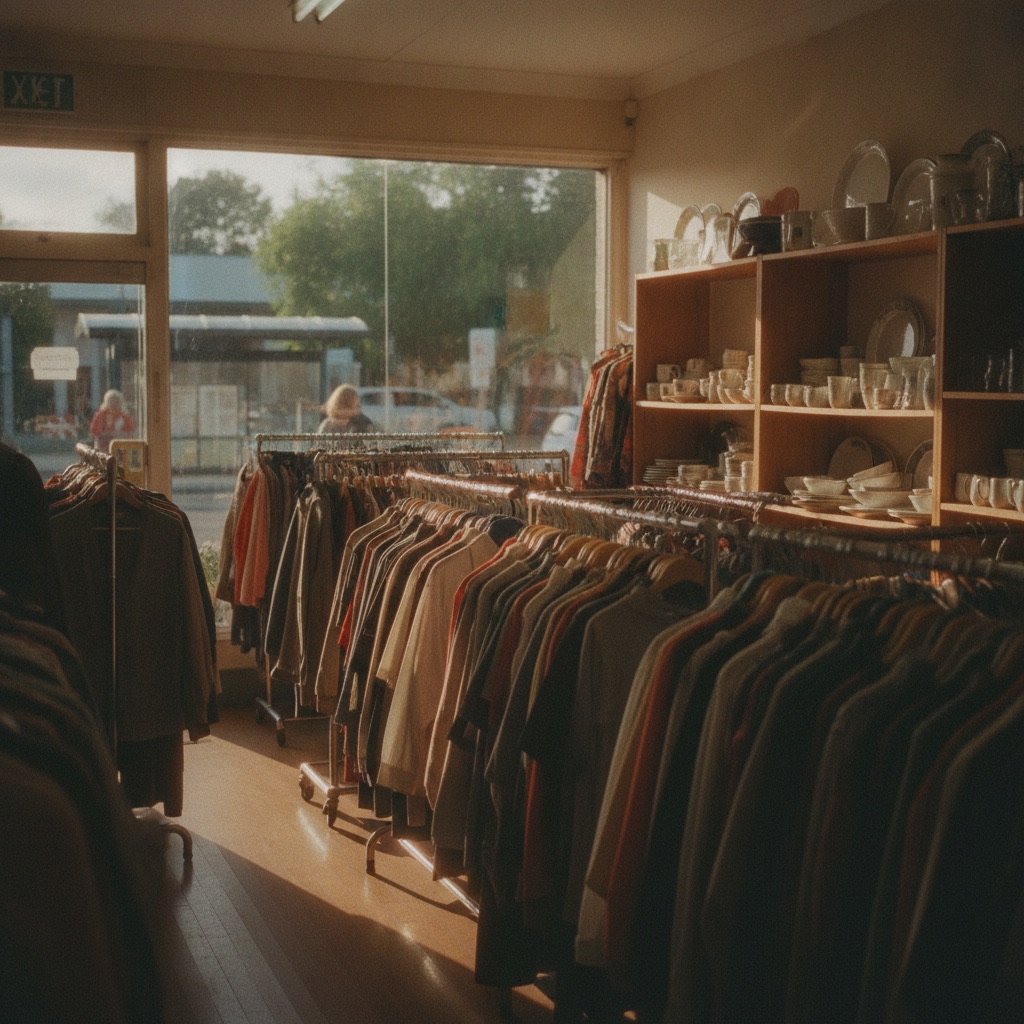
Good op shopping is not luck. It is route planning, timing and suburb selection, done deliberately, the way serious hunters have always done it. Treat it like a sport and the racks start paying out.
For the uninitiated: op shops, short for opportunity shops, are Australia and New Zealand’s charity-run second-hand stores. Vinnies, Salvos, Lifeline, Red Cross and a long tail of independents sell donated clothes, books, crockery and furniture, with the proceeds funding their charity work. Everything below is about beating the other people who also know this.
Timing beats everything else
Stock in an op shop is not seasonal, it is rotational. Donations come in, volunteers sort them, racks get refilled, and the good pieces leave within hours of hitting the floor. Your job is to be there when the refill happens, not after.
Weekday mornings are the classic window. Weekend donations get processed early in the week, and the racks are freshest before the lunchtime browsers arrive. If mornings are impossible, the last hour of the day is the honest fallback: picked over, but quiet enough to actually dig.
The dead zone is the middle of a Saturday. You will be elbow to elbow with everyone else who had the same casual idea, working racks that were stripped by 10am.
The suburb strategy
Where a shop sits determines what walks in its donation door. This is the single most useful thing to internalise.
Op shops in well-heeled suburbs get the labels, the barely-worn work wear and the wedding-gift homewares that never left the box. They also price accordingly, because the volunteers are not fools. You are paying more per piece but the hit rate is higher.
Regional towns and outer suburbs run the opposite way: lower prices, slower turnover, and a better chance of old stock that has sat unnoticed. Vintage hunters do their best work out of town, where a 1970s dinner set is priced as crockery rather than as “mid-century”.
Student suburbs sit in the middle: high churn, fast fashion in volume, occasional gold from share-house clean-outs.
Plan a route, not a raid
One shop is a browse. Five shops in a line is a strategy. Before you leave, map the op shops in your target area and string them into a walkable or drivable loop, starting with the one that matters most to you while your eyes are still fresh.
Clusters are common: charity stores tend to gather on the same strip because the rent logic that suits one suits them all. A main street with three op shops within 200 metres is worth an hour of anyone’s time. Build the day around the cluster, then book in lunch nearby so the mission has a proper halfway point. Our food and drink listings cover most towns and suburbs you are likely to be raiding.
What to check before you buy
- Seams, zips and buttons first: a missing button is a bargain, a broken zip is a project.
- Fabric content on the tag. Natural fibres survive donation and washing; tired synthetics rarely earn their hanger space.
- Underarms and collars on shirts, knees on trousers, soles on shoes. Wear hides in predictable places.
- Electricals: many stores test and tag them, but ask. If it cannot be tested, price the risk in.
- Furniture: sit on it, open every drawer, check for wobble. Solid timber can be rescued; sagging foam cannot, cheaply.
And wash everything when you get home. Not because op shops are grubby, but because it is the sensible reset between the previous life and yours.
Etiquette, because it matters
Op shops run on volunteers and donated goods, so the rules are simple. Do not haggle hard on already-cheap items. Do not dump unsellable junk in the donation bin after hours, which shifts disposal costs onto the charity. If a piece is genuinely mispriced in your favour, that is the game; if a volunteer made an obvious error, be a human about it.
Donating well is part of the sport too. Clean, folded, working: if you would not hand it to a friend, it is landfill, and the charity should not have to pay to prove it.
Make a day of it
The best op shop days are built like small road trips: a cluster of shops, a good lunch, something else in the area to justify the drive. Browse shopping listings across Australia and New Zealand to scout an area before you commit, then stack the rest of the day from the things to do listings for the same town. The racks are a lottery; the day out is the guarantee.