
Go early or go late. Never, under any circumstances, the middle. That one rule separates people who shop farmers markets from people who wander them holding a coffee, and everything else in this guide hangs off it.
Why the middle is dead time
Farmers markets across Australia and New Zealand mostly run weekend mornings, and they follow the same arc everywhere. The first hour belongs to serious shoppers: full range, best specimens, stallholders fresh enough to talk. The last hour belongs to bargain hunters, when growers would rather discount a tray of tomatoes than pack it back into the van.
The middle is neither. Peak crowd, picked-over benches, queues for coffee, and stallholders too slammed to answer a question. You pay full price for second choice. If you can only manage 10:30am, honestly, go to the greengrocer instead.
The early game
Arriving at opening is a buying trip, not an outing. You are there for the things that run out: the good eggs, the popular sourdough, the first-of-season fruit that never survives the opening hour. Walk the full market once before buying anything, because the second stall often has the same bunches for less, then commit fast.
Talk to the growers while you can. The person behind the trestle usually picked the produce, and “what should I buy this week” is the single highest-value question in food shopping. They will point you at whatever the weather was kind to, which is always the better feed and usually the better price.
How to spot the real growers
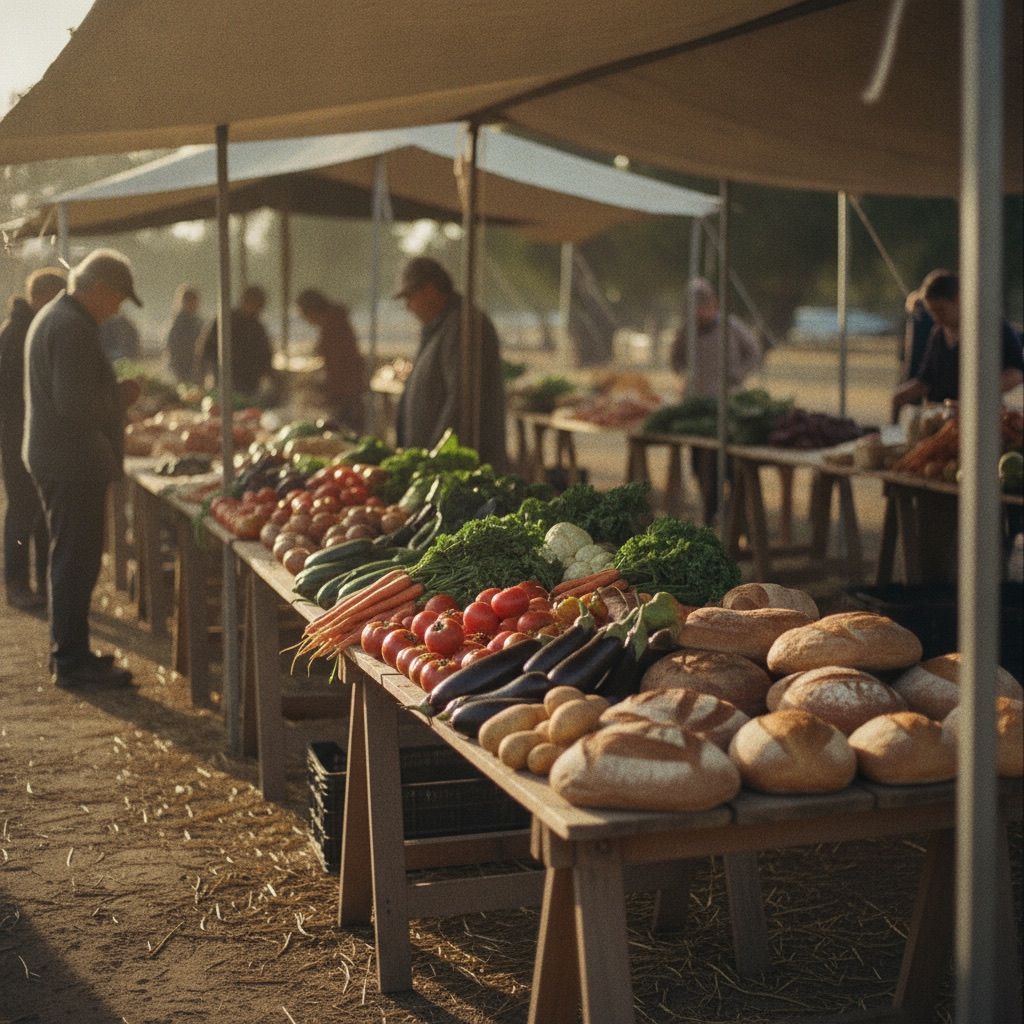
Most markets mix genuine producers with resellers, and ten seconds of looking tells you which is which. Real growers sell what their patch produces, so the range is narrow and the quantities are lumpy: a mountain of zucchini, three sad capsicums, whatever the week delivered. Resellers look like a fruit shop, with everything in even supply and out of season.
Dirt is a good sign. So are odd sizes, leaves still attached, and a seller who can tell you when the picking happened without thinking about it. None of this makes resellers villains, but if you wanted warehouse produce, the supermarket sells it cheaper and with parking.
The late game
The final 45 minutes reward flexibility. This is when boxes get marked down, “seconds” trays of blemished fruit appear, and anyone buying in bulk for sauce, jam or a freezer session does their whole run. You surrender choice; you gain margin. Come with an esky, a soft plan and no shopping list at all. The late window is also the sociable one: the crowd has thinned, the stallholders can breathe, and the conversations you have at 11:45 are the ones that turn into a standing weekly order.
What to buy where
Not everything at a market deserves your money equally. A rough order of operations:
- Buy first: anything with a queue of locals, eggs, bread, and whatever fruit or veg is at its seasonal peak. The locals are the signal.
- Buy confidently: honey, preserves and sauces from the maker. These keep, travel and taste like the region.
- Buy last: anything cold or crushable. Cheese, meat and berries want to go straight from the stall to the esky to home.
- Think twice: produce identical to supermarket stock at double the price. A market sticker is not a flavour guarantee; ask where it was grown.
Logistics the regulars never mention
Bring a big bag or a basket, small notes and a card as backup, since coverage varies stall to stall. Wear shoes that can handle wet grass. If the market allows dogs, keep yours out of the produce line of fire. And eat before you go or budget for the fact that you will not: the bacon roll stall exists because nobody can resist it at 7am. One more habit worth stealing from the regulars: keep your cash in a pocket, not a wallet buried under bags, because the whole rhythm of a good market run is not breaking stride.
Turn it into the whole morning
The best market towns earn a full day. Scout the area’s food and drink listings before you go so the post-market lunch is already chosen, check the local shopping options if the town warrants a wander, and stack the afternoon from the things to do listings for wherever the market took you. Early start, boot full of vegetables, long lunch: that is the formula, and it has never once needed improving.